7 Healing Postpartum Workouts to Regain Strength
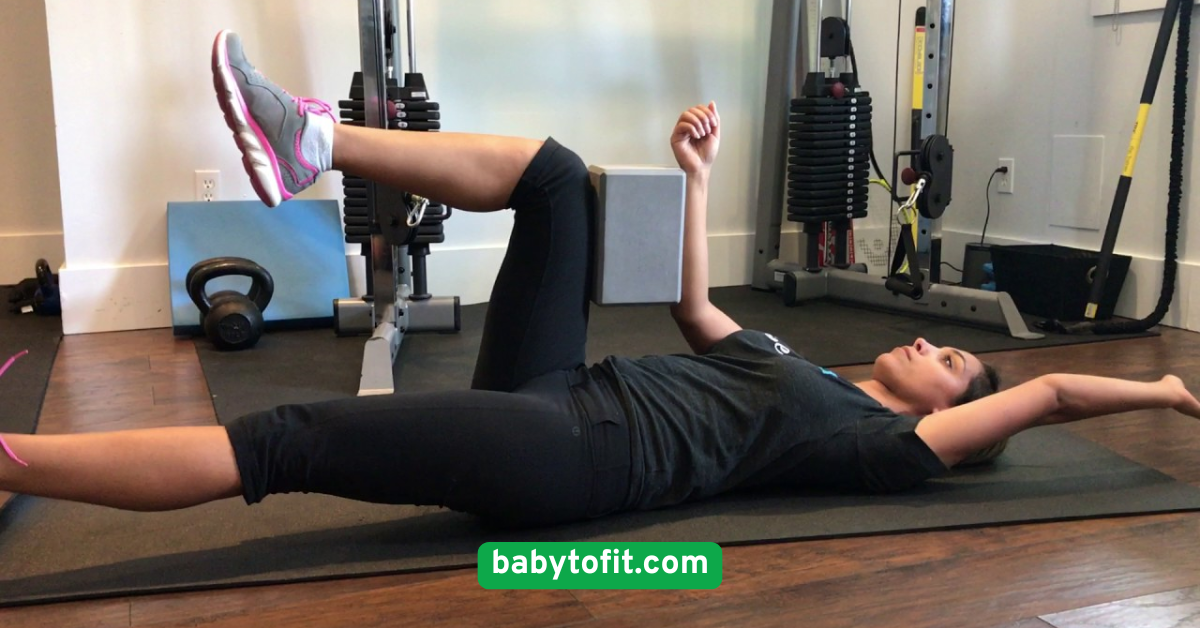
1. Wall-Assisted Dead Bug
The Wall-Assisted Dead Bug is a fantastic, low-impact exercise for postpartum moms focusing on core stability and coordination. This move is perfect for engaging deep abdominal muscles without putting too much strain on the body.
- How to do it: Lie on your back with your feet pressed against a wall and knees bent at 90 degrees. Engage your core and slowly extend one leg while lowering the opposite arm overhead, keeping your back flat on the floor. Return to the starting position and alternate sides.
- Benefits: This workout targets the transverse abdominis—the deep core muscle that often weakens after pregnancy. It also improves balance and encourages safe movement patterns, essential in postpartum recovery.
- Tips: Move slowly and breathe steadily throughout. If you feel any discomfort in your lower back, reduce the range of motion or stop. Consistency with this exercise can gradually rebuild core strength and protect the lower back.
This exercise is particularly helpful in healing diastasis recti (separation of abdominal muscles) by gently re-engaging the core without overexertion.
2. Modified Forearm Plank
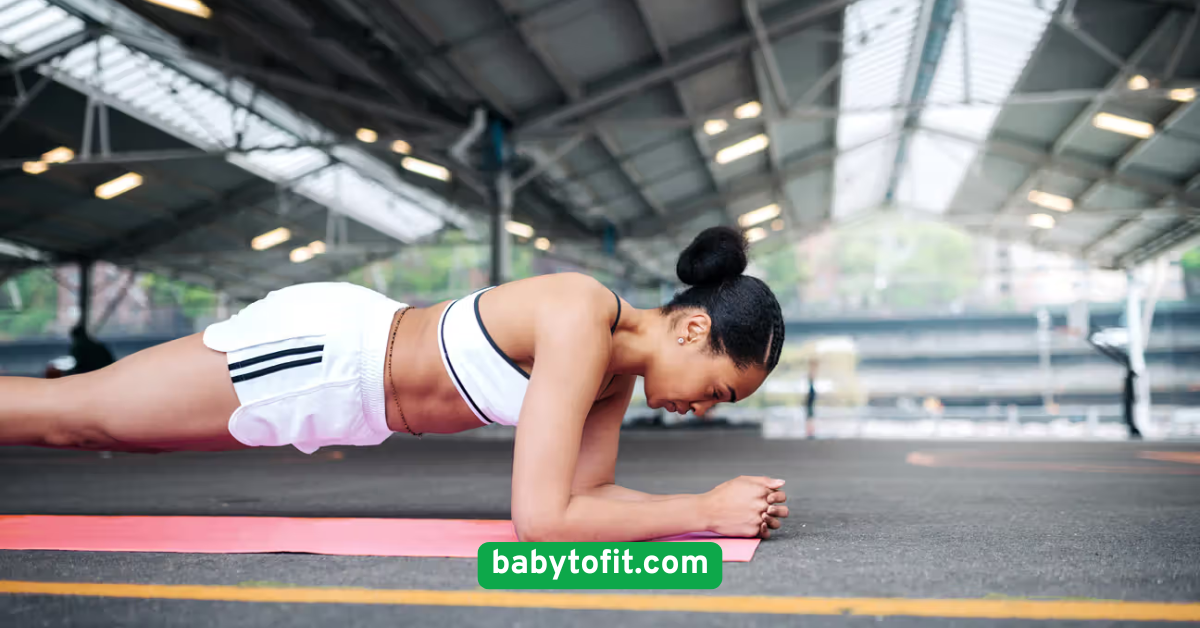
Planks are a well-known core-building exercise, but postpartum moms should start with modified versions to avoid strain. The Modified Forearm Plank strengthens the entire core, shoulders, and glutes with controlled intensity.
- How to do it: Start on your forearms and knees, keeping your back straight and your core engaged. Hold the position while breathing deeply, aiming for 15 to 30 seconds to start.
- Benefits: This exercise strengthens the abdominal muscles, improves posture, and supports pelvic floor recovery. Holding the plank helps activate muscles needed for everyday tasks like carrying your baby.
- Tips: Focus on quality over duration. It’s better to hold a proper plank for a shorter time than to maintain poor form for longer. Listen to your body and gradually increase hold times as strength improves.
The Modified Forearm Plank also helps stabilize the spine, which is crucial for moms experiencing back pain post-delivery.
3. Seated Cat-Cow Stretch
Stretching plays a vital role in postpartum recovery by easing muscle tightness and promoting flexibility. The Seated Cat-Cow Stretch gently mobilizes the spine and alleviates tension built up from nursing or carrying your baby.
- How to do it: Sit comfortably on a chair or yoga mat with your feet flat on the floor. Inhale as you arch your back, lifting your chest and gazing upwards (Cow pose). Exhale as you round your spine, tucking your chin towards your chest (Cat pose). Repeat this sequence slowly for 8 to 10 breaths.
- Benefits: This stretch improves spinal mobility, relieves back pain, and helps restore a natural posture. It’s also calming, reducing stress and promoting relaxation.
- Tips: Perform this stretch multiple times a day, especially if you feel stiffness or discomfort after feeding your baby or sitting for extended periods.
Incorporating this stretch can enhance your overall movement quality, making everyday activities more comfortable.

4. Standing Calf Raises
Although simple, Standing Calf Raises are powerful in improving circulation and strengthening the lower legs. This exercise is especially beneficial after pregnancy due to swelling and decreased mobility.
- How to do it: Stand with your feet hip-width apart near a sturdy surface for balance. Slowly rise onto your toes, lifting your heels as high as comfortable. Hold for a second, then lower your heels back down. Repeat for 10 to 15 repetitions.
- Benefits: This exercise improves circulation in your legs, helping reduce postpartum swelling. It also strengthens calf muscles, supporting better balance and endurance during daily activities.
- Tips: Move slowly and avoid bouncing. If you feel dizzy, stop and rest.
Regular calf raises can make standing and walking easier, which are key activities during early motherhood.
5. Wrist and Finger Stretching
Caring for a newborn means repetitive hand and wrist movements, often leading to soreness or stiffness. Wrist and Finger Stretching exercises relieve tension, enhance flexibility, and prevent common issues like carpal tunnel syndrome.
- How to do it: Extend your arm with your palm facing up. Use the opposite hand to gently pull back your fingers toward your forearm for a comfortable stretch. Hold for 15-20 seconds and switch hands. Repeat with palms facing down.
- Benefits: These stretches reduce muscle tightness and improve hand dexterity. They also relieve tension from breastfeeding, bottle-feeding, and soothing your baby.
- Tips: Incorporate these stretches multiple times a day, especially if you notice wrist discomfort or numbness.
Maintaining hand health is critical for new moms to perform daily caregiving activities comfortably.

6. Gentle Hip Circles
Postpartum hips often feel tight or unstable due to hormonal changes and childbirth. Gentle Hip Circles help restore hip mobility and alleviate pelvic discomfort.
- How to do it: Stand with feet hip-width apart, hands on hips. Slowly rotate your hips in a circular motion, making large but controlled circles. Do 5-8 circles clockwise, then reverse.
- Benefits: This exercise improves pelvic flexibility, reduces tension in hip muscles, and enhances circulation. It also supports pelvic floor recovery and posture realignment.
- Tips: Perform hip circles in a slow, mindful way, paying attention to how your body feels. Stop if you experience pain.
Adding gentle hip mobility exercises can significantly improve comfort during movement and sitting.

7. Restorative Yoga Breathing
Deep breathing is an underrated yet powerful tool for postpartum healing. Restorative Yoga Breathing calms the nervous system, reduces stress, and aids core engagement.
- How to do it: Sit or lie down comfortably. Place one hand on your chest and the other on your belly. Take slow, deep breaths through your nose, feeling your belly rise and fall. Aim for 5-10 minutes of mindful breathing.
- Benefits: This breathing technique reduces anxiety, enhances oxygen flow, and supports abdominal muscle activation. It’s also beneficial for managing postpartum fatigue and improving sleep quality.
- Tips: Practice breathing exercises daily, especially when feeling overwhelmed or fatigued.
Pairing restorative breathing with physical workouts helps your body heal holistically, balancing physical and emotional recovery.

Conclusion
Regaining strength after childbirth is a journey that requires patience, kindness, and the right support. The 7 healing postpartum workouts outlined here—ranging from core-focused moves like the Wall-Assisted Dead Bug to soothing stretches and breathing techniques—are designed to gently rebuild your strength while honoring your body’s need for healing. Remember, every small step counts, and listening to your body is key. Before beginning any postpartum exercise program, it’s wise to consult your healthcare provider to ensure these workouts align with your recovery. Embrace this time as a beautiful path to renewed energy, confidence, and well-being!


